Pełne portfolio Microsoft pod jednym dachem
Jeden partner zamiast kilku dostawców do koordynowania.

Pełne wsparcie marketingowe, sprzedażowe, operacyjne i techniczne dla Twojej firmy z globalnym partnerem Microsoft.
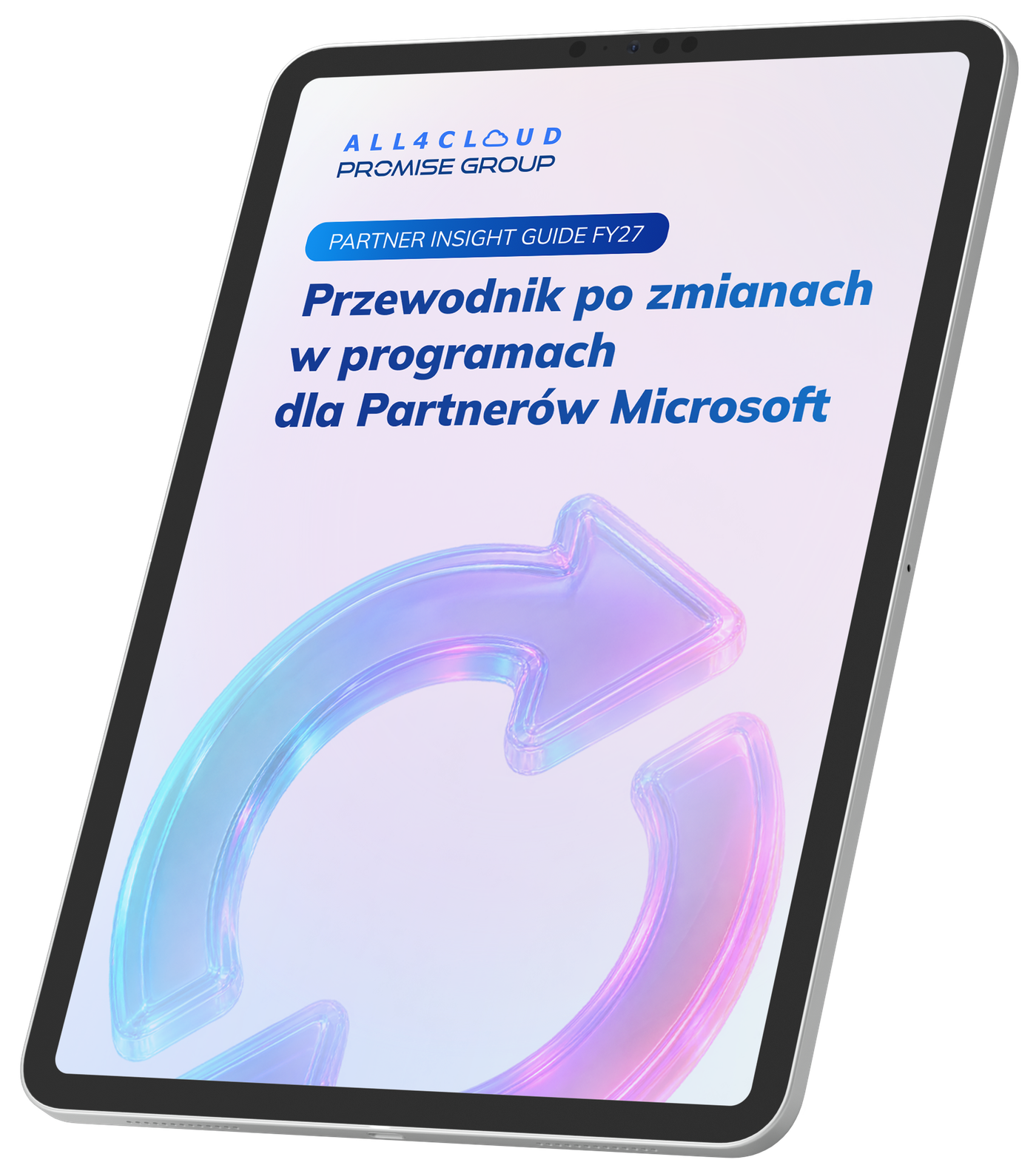
Sprawdź nowe programy wsparcia, możliwości finansowania i zmiany dotyczące Dynamics 365, Azure, Copilot & AI oraz Security.
Pobierz za darmo





Partner, który zostaje z Tobą po podpisaniu umowy. Nie kończymy na dostarczeniu licencji. Budujemy z Tobą ofertę, wspieramy sprzedaż i jesteśmy przy wdrożeniu — od pierwszego kontaktu z klientem po utrzymanie usługi.
Jeden partner zamiast kilku dostawców do koordynowania.
Certyfikacje Microsoft, warsztaty techniczne i sprzedażowe.
Od projektu rozwiązania, przez uruchomienie, po bieżące utrzymanie usługi u klienta.
Pomagamy budować ofertę i przekazujemy gotowe leady.
Rozwiązania
Wybierz obszary, które pasują do Twoich klientów. Wesprzemy Cię techniczne i sprzedażowo w każdym z nich.

Chmura
Migracje do chmury, infrastruktura, optymalizacja kosztów i skalowanie środowisk klientów.
Dowiedz się więcej
Cybersecurity
Ochrona tożsamości, danych, urządzeń, aplikacji i środowisk chmurowych klientów dzięki zintegrowanym rozwiązaniom Microsoft Security.
Dowiedz się więcej
CRM i ERP
CRM i ERP dopasowane do procesów sprzedaży, obsługi klienta i finansów.
Dowiedz się więcej
AI
Wdrożenia Microsoft 365 Copilot i agentów AI, które wspierają produktywność zespołów oraz automatyzację codziennych procesów Twoich klientów. #
Dowiedz się więcej
ISV
Program Software Development Company (ISV): wsparcie techniczne, publikacja w Marketplace i integracje z platformą Microsoft dla Twojego produktu.
Dowiedz się więcejZacznij współpracę z All4Cloud
Korzystaj z wiedzy, narzędzi oraz wsparcia, które pomagają szybciej rozwijać biznes.
Krok 1 z 3
Program partnerski All4Partners
Korzystaj z trzech kluczowych obszarów wsparcia: marketingu i sprzedaży, wsparcia technicznego oraz wsparcia operacyjnego i edukacji.
Dołącz do programu All4Partners
Buduj swoją pozycję w programie dzięki wynikom sprzedaży.
Odbieraj coraz większe wsparcie i dostęp do dodatkowych korzyści.
Kontakt
Porozmawiajmy o tym, jak All4Cloud może wesprzeć sprzedaż i wdrożenia w Twojej firmie.
Zasoby